
The Big Reveal: We are thrilled to share some exciting developments at JuliaHub. This will be officially unveiled during the first week of May. We can't say much just yet, but stay tuned, you wouldn’t want to miss this.
cuTile.jl for High-Performance Computing in Julia: NVIDIA's new CUDA Tile programming model brings a high-level, portable abstraction for writing high-performance GPU kernels. Join Dr. Andy Terrel(NVIDIA) and Dr. Tim Besard(JuliaHub) in this webinar that introduces the CUDA Tile, and how it's been ported to Julia as cuTile.jl. The session will explore tile-based GPU programming through real-world examples spanning linear algebra routines, AI inference kernels, and HPC algorithms. Register here.
Meet the Dyad Agent: The Intelligent Agent for Model-Based Engineering: This blog post explores the intersection of AI and system simulation, diving deep into Agentic Modeling and Simulation using Dyad and its open-source Julia foundation. Read it here.
cuTile.jl 0.2: New Features, Improved Performance, and Julia 1.13 Support: cuTile.jl v0.2 is the first major update of the Julia package for writing GPU kernels using NVIDIA's tile-based programming model. This release adds many new features, supports more of the Julia language, and greatly improves performance. Read the release notes.
Dyad AI Modeling Livestream: Join our new livestream where Dr. Chris Rackauckas builds real-world models with Dyad’s agentic AI. Bring your own challenge and watch models come together live, showcasing rapid model generation, iteration, and validation. Streaming live on JuliaHub YouTube and @ChrisRackauckas Twitch, the series creates an open lab for engineers and researchers to explore agentic simulation firsthand. https://www.youtube.com/channel/UCvZxpJZ6_4j63ZWCbxdFzdA/live
Webinar Series with Dr. Michael Tiller: In this three-part webinar series, Dr. Michael Tiller explores modeling and simulation in Dyad. Starting with the fundamentals of acausal modeling, the series walks through building simple system models and comparing them with traditional approaches. It then progresses to composing hierarchical system models and understanding DAEs, along with techniques to solve them efficiently using symbolic methods. The series concludes with a live demonstration of the Dyad agent, showcasing how it supports engineering workflows, from model creation to analysis, while simplifying and accelerating the overall development process. Register here.
Easy Pharmacometric Modeling using Pumas on JuliaHub: This webinar demonstrates how to run a complete Pumas PK/PD workflow on the JuliaHub cloud platform. Learn to create and manage a Pumas project, develop and execute code within the Pumas IDE, and collaborate by sharing projects. Through a hands-on one-compartment oral dosing example, the session also explores visualization and analysis using Quarto, including comparing model parameters like absorption, elimination rates, and time lags.
JuliaCon 2026 Early Bird Tickets: Early Bird Tickets for JuliaCon 2026 are now available until May 1, 2026. The conference will take place in person at the Johannes Gutenberg University in Mainz, Germany from August 10th to August 14th. Get your tickets now.
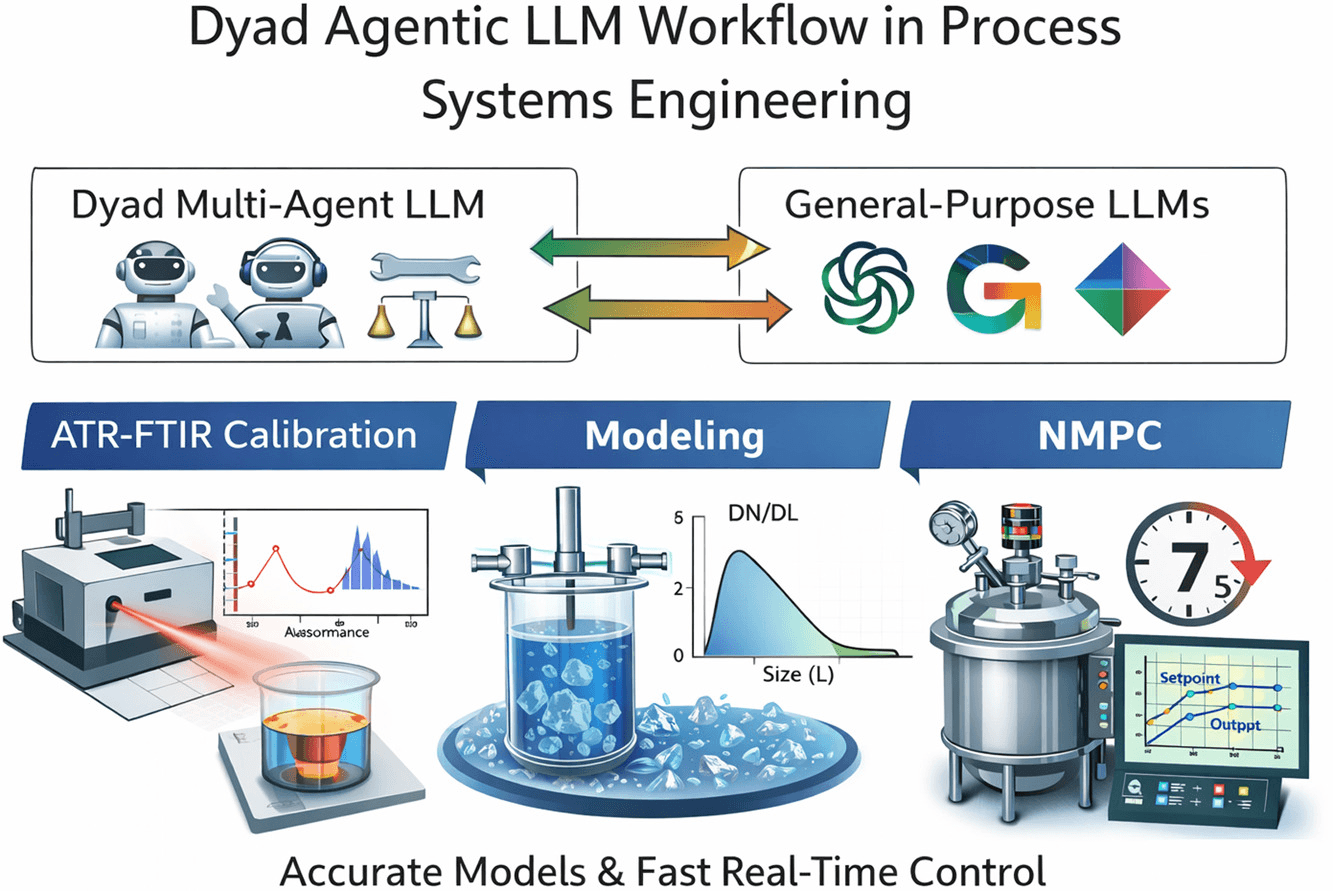
Improving Process Systems Engineering With Specialized Multi-agent Large Language Models: This peer-reviewed study observed Claud, Opus,, Gemini, Dyad, and ChatGPT Codex’s ability to generate models in chemical process engineering and the associated non-linear model-predictive controls(NMPC). The result was that specialized agents in Dyad were able to one-shot the tasks and generate high-performance and usable control mechanisms, greatly outperforming the unspecialized AI systems in the context of scientific modeling and evaluation. Read the peer-reviewed article here.
Improvements of the Modified Anderson-Björck (modAB) Root-Finding Algorithm: A new advancement in numerical methods, Modified Anderson-Björck’s method, offers a compelling balance between speed and reliability in root-finding algorithms. By combining bisection with Anderson-Björck’s approach, this method achieves fast convergence while maintaining worst-case optimality. It smartly switches strategies using a linearity check and overcomes the classic false-position limitation with targeted corrections. Early benchmarks show promising gains over widely used methods like Ridders, Brent, and ITP, making it a strong candidate for high-performance scientific computing. Read the paper here.
Free Online Julia Webinars from JuliaHub: JuliaHub provides free one-hour Webinars led by JuliaHub staff and other experts. Space is limited and registration is required, so please sign up today!
What Makes a Good Engineering Model with Dr. Ranjan Anantharaman, Thursday April 9, 1-2 PM Eastern(US)
Easy Pharmacometric Modeling using Pumas on JuliaHub with Phil Vernes, Thursday April 16, 1-2 PM Eastern(US)
Introduction to Acausal Modeling with Dyad with Dr. Michael Tiller, Wednesday May 6, 1-2 PM Eastern (US)
cuTile.jl for High-Performance Computing in Julia with Dr. Andy Terrel(NVIDIA) and Dr. Tim Besard(JuliaHub), Tuesday May 12, 1-2 PM Eastern(US)
Introduction to Symbolic Manipulation with Dyad with Dr. Michael Tiller, Wednesday May 13, 1-2 PM Eastern(US)
Introduction to Agent Assisted Engineering Workflows with Dr. Michael Tiller, Wednesday May 20, 1-2 PM Eastern(US)
Recent JuliaHub Webinars: JuliaHub provides free one-hour Webinars on topics of interest to Julia users. Nearly 100 past Webinars are available online. Click here to watch.
This Month in Julia World: This Month in Julia World is a newsletter from Stefan Krastanov with up-to-date information about Julia events, new releases and more. Read it here.
Nouvelles Julia - Julia News en Français: Nouvelles Julia is a newsletter in French with the latest Julia news. Read it here.
JuliaCon 2026: JuliaCon 2026 will take place August 10-15 in Mainz, at the Johannes Gutenberg University
New Blog Posts from SciML: SciML has published several new blog posts. You can read them here.
Blog Posts from Dr. Chris Rackauckas and Great Lakes Consulting: Read blog posts by JuliaHub VP of Modeling and Simulation Dr. Chris Rackauckas and Great Lakes Consulting Senior Julia Developer Steven Whitaker.
Julia Dispatch Podcast: Julia Dispatch is a Julia podcast from Dr. Chris Rackauckas (JuliaHub VP of Modeling and Simulation) and Dr. Michael Tiemann. Watch it here.
JuliaHub Digital Twin Solutions and Consulting: We help enterprises build deployable and scalable solutions leveraging SciML to create highly accurate and trustworthy Digital Twins. Applications span asset health monitoring, optimization and predictive maintenance, process optimization, model-based control, design optimization, and internal or external simulation tools. We also offer consulting and technical support. Schedule a consultation with our solutions team to discuss your use case.
Careers at JuliaHub: JuliaHub is a fast-growing tech company with fully remote employees in 20 countries on 6 continents. Click here to learn more about exciting careers and internships with JuliaHub.
Julia Expertise Needed at University of Glasgow: Dr. Eric Silverman, Research Fellow at the University of Glasgow, seeks a Research Associate for a 5-year research project on computational modeling for public health using an agent-based modeling framework developed in Julia. Julia experience and a PhD are required for this position. Click here for more information and to apply.
Julia Blog Posts
cuTile.jl 0.2: New features, improved performance, and Julia 1.13 support (Dr. Tim Besard)
Meet the Dyad Agent: The Intelligent Agent for Model-Based Engineering (Dr. Ranjan Anantharaman)
Spectral Timing in Julia: Extending Stingray.jl for X-ray Astronomy (Omhabib)
How to Use Google Colab’s Pinned Runtime Versions for Python, Julia, and R (Pierre DeBois)
Python is slow…(Jungsoo Kim)
From Physics to Code: Solving the Pendulum ODE in Julia (Sanjana Salkar)
Announcing cuTile.jl v0.2 With New Features and Improved Performance (JuliaHub)
From Equations to Experiments: Modeling ODEs in Julia for Scientific Machine Learning (Sanjana Salkar)
Upcoming Julia and JuliaHub Events
Online: What Makes a Good Engineering Model with Dr. Ranjan Anantharaman, Thursday April 9, 1-2 PM Eastern(US)
Online: Easy Pharmacometric Modeling using Pumas on JuliaHub with Phil Vernes, Thursday April 16, 1-2 PM Eastern(US)
Online: Introduction to Acausal Modeling with Dyad with Dr. Michael Tiller, Wednesday May 6, 1-2 PM Eastern (US)
Online: cuTile.jl for High-Performance Computing in Julia with Dr. Andy Terrel(NVIDIA) and Dr. Tim Besard(JuliaHub), Tuesday May 12, 1-2 PM Eastern(US)
Online: Introduction to Symbolic Manipulation with Dyad with Dr. Michael Tiller, Wednesday May 13, 1-2 PM Eastern(US)
Online: Introduction to Agent Assisted Engineering Workflows with Dr. Michael Tiller, Wednesday May 20, 1-2 PM Eastern (US)
Udine, Italy: VI Grade 2026 Smart Prototypes Summit at VI grade’s Simcenter in Udine hosted by HBK from May 19-22
Dubrovnik, Croatia: Population Approach Group Europe with JuliaHub, June 2-5
Johannes Gutenberg University Mainz (Germany, near Frankfurt): JuliaCon 2026 with JuliHub, August 10-15
Contact Us: Please contact us if you want to:
Obtain pricing for Dyad and Julia consulting projects for your organization
Schedule Dyad or Julia training
Share information about exciting new Julia case studies or use cases
Partner with JuliaHub to organize a Julia event online or offline
About JuliaHub, Julia and Dyad
Dyad combines physics-based modeling with scientific machine learning(SciML) for mission-critical engineering. Dyad is fully agentic in its design, making it possible for engineers to carry out complex workflows through natural language interaction. Dyad integrates code, diagrams and agentic workflows in a seamless tool driving 10x productivity. Leveraging the Julia and the SciML ecosystem under the hood, Dyad also benefits from significantly higher performance compared to the competition, often being 100x faster at simulating complex physics. Teams leverage Dyad to build smarter, faster, and more reliable systems without compromising the rigor of traditional engineering, supporting use cases from predictive maintenance to real-time performance tuning and over-the-air updates. The Dyad tool powered by Julia and SciML is free to use. Get started here.
JuliaHub is a fast and easy-to-use code-to-cloud platform that accelerates the development and deployment of Julia programs. JuliaHub users include some of the most innovative companies in a range of industries including pharmaceuticals, automotive, energy, manufacturing, and semiconductor design and manufacture.
Julia is a high performance open source programming language that powers computationally demanding applications in modeling and simulation, drug development, design of multi-physical systems, electronic design automation, big data analytics, scientific machine learning and artificial intelligence. Julia solves the two language problem by combining the ease of use of Python and R with the speed of C++. Julia provides parallel computing capabilities out of the box and unlimited scalability with minimal effort. Julia has been downloaded by users at more than 10,000 companies and is used at more than 1,500 universities. Julia co-creators are the winners of the prestigious James H. Wilkinson Prize for Numerical Software and the Sidney Fernbach Award.